Frequently Asked Questions
Who can join True Self Mastery classes?
Our classes are open to all women who are interested in personal development and enhancing their well-being. No prior experience is necessary.
What types of classes do you offer?
We offer a variety of classes, including mindfulness meditation, yoga, self-care workshops, and empowerment seminars.
How do I sign up for a class?
You can sign up for classes through our website. Simply browse our class schedule, select the class you're interested in, and complete the registration process online.
How long are the classes?
Class lengths vary, but most sessions are between 60 to 90 minutes. Check the specific class details on our website for exact timings.
Can I attend a class online?
Yes, we offer both in-person and online classes to accommodate different preferences and schedules. Online class details and login information will be provided upon registration.
What is the cost of the classes?
Class fees vary depending on the type and duration of the class. Please visit our website for detailed pricing information.
Is there a membership option?
Yes, we offer membership packages that provide discounted rates on classes and workshops. Membership details and benefits are available on our website.
What if I need to cancel a class?
We understand that plans change. Please refer to our cancellation policy on the website for details on how to reschedule or cancel your class.
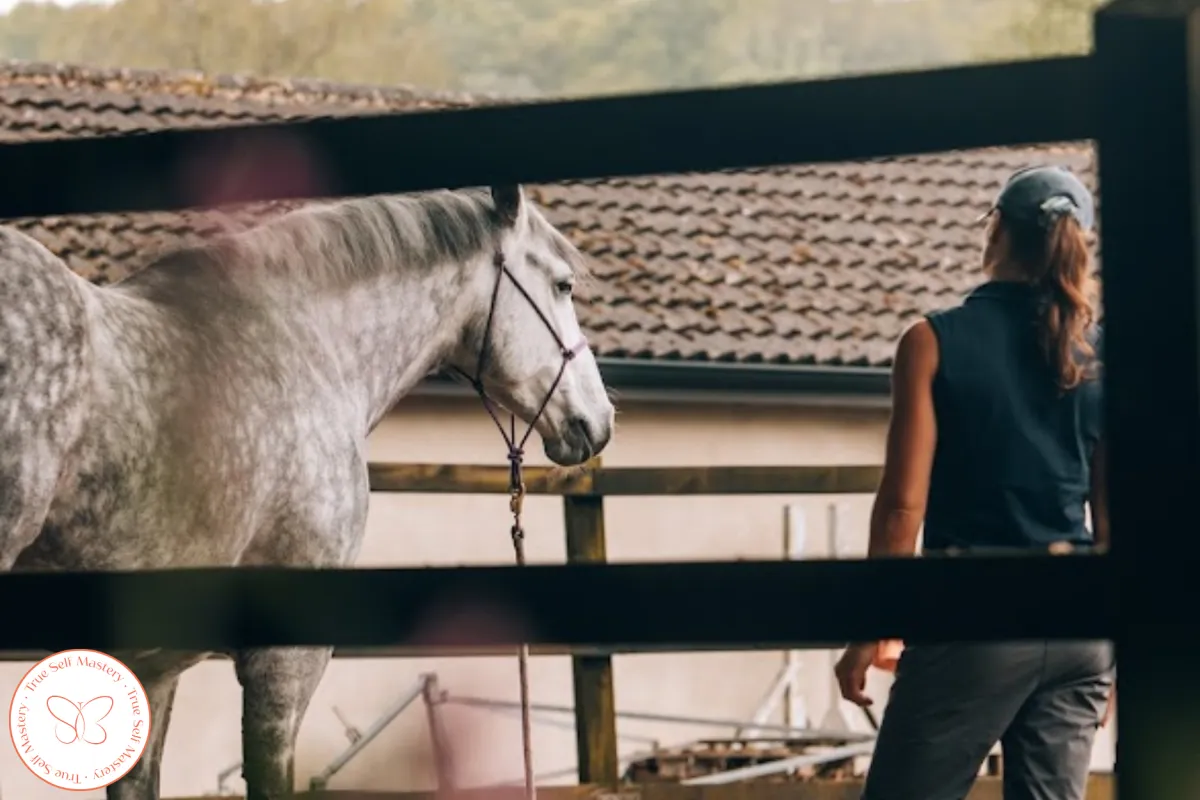
Your Horse is Whispering. Are You Listening?
As a rider, you know the big moments. The refusal. The spook. The bolt. The sudden lameness. These are the "screams"—the loud, unavoidable signals that something is wrong. They are impossible to ignore. They force you to stop, assess, and change your plan.
But what if I told you that by the time your horse screams, he has been whispering for weeks, maybe even months?
And the real art of horsemanship isn't found in how you handle the screams. It’s found in your ability to hear the whispers.
The Language of Whispers
Horses are masters of subtlety. Their whispers are quiet, consistent, and easy to dismiss if you have a human agenda.
A whisper sounds like:
A little bit of tension in the jaw when you tack up.
A tail that’s held just a little bit tighter than usual.
A slight hesitation before the canter transition.
An eye that looks through you instead of at you.
These aren't "bad behavior." They are requests for clarification. They are tiny bits of data telling you that your horse is feeling a low level of physical or emotional stress.
Most of us, with our goals and our plans, push through them. We write them off as a "mood" or a "quirk." We ignore the data.
From a Whisper to a Scream
But a horse cannot ignore his own biology. When the low-level stress of the whispers isn't addressed, it builds. The nervous system shifts from "I'm a little concerned" to "I am in danger."
And that is when the scream happens.
The scream is the biological tipping point. It’s the moment the body can no longer contain the accumulated stress. It’s the spook that "came out of nowhere." It’s the sudden resistance that feels like a betrayal.
It was never out of nowhere. It was simply unheard.
How to Become a Better Listener
This pattern isn't unique to horses. It shows up in our leadership, our relationships, and our own bodies. We ignore the whisper of fatigue and end up with the scream of burnout.
Learning to hear the whispers requires you to slow down and remove your agenda. It requires you to be present enough to notice the small things. It's not about "fixing" the horse; it's about creating a connection so quiet and so clear that a whisper is all you ever need.
P.S. If you are ready to stop dealing with the screams and start building the telepathic partnership that comes from hearing the whispers, The Horse & Rider Reset is designed for you. We teach you how to turn down your own "static" so you can finally hear what your horse is saying.
[LINK: The Horse & Rider Reset]