Frequently Asked Questions
Who can join True Self Mastery classes?
Our classes are open to all women who are interested in personal development and enhancing their well-being. No prior experience is necessary.
What types of classes do you offer?
We offer a variety of classes, including mindfulness meditation, yoga, self-care workshops, and empowerment seminars.
How do I sign up for a class?
You can sign up for classes through our website. Simply browse our class schedule, select the class you're interested in, and complete the registration process online.
How long are the classes?
Class lengths vary, but most sessions are between 60 to 90 minutes. Check the specific class details on our website for exact timings.
Can I attend a class online?
Yes, we offer both in-person and online classes to accommodate different preferences and schedules. Online class details and login information will be provided upon registration.
What is the cost of the classes?
Class fees vary depending on the type and duration of the class. Please visit our website for detailed pricing information.
Is there a membership option?
Yes, we offer membership packages that provide discounted rates on classes and workshops. Membership details and benefits are available on our website.
What if I need to cancel a class?
We understand that plans change. Please refer to our cancellation policy on the website for details on how to reschedule or cancel your class.
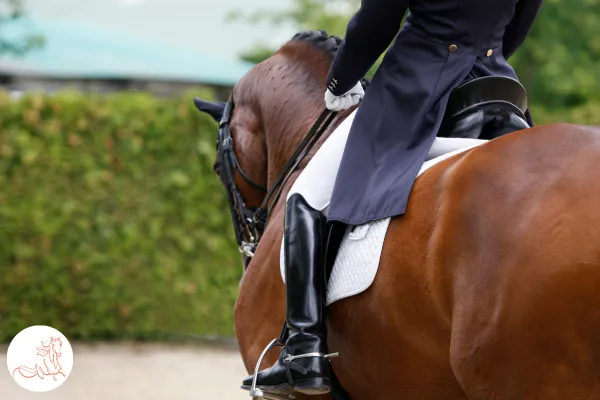
The Question Your Dressage Partnership Has Never Been Asked
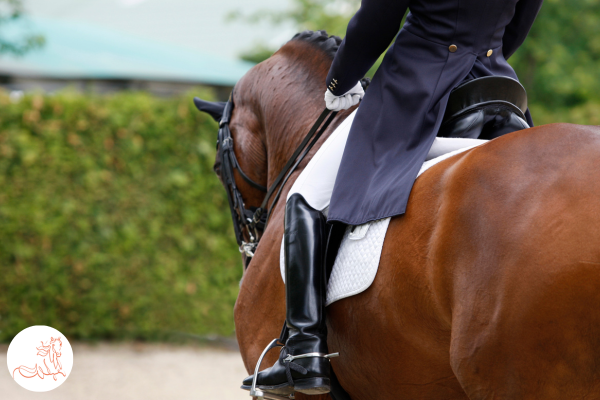
When a dressage partnership underperforms, the industry has a standard sequence. The horse gets assessed, treated, and put through a retraining plan. The rider gets lessons, a new trainer, possibly a physio assessment. Each approach finds something real. Each one produces partial progress. And then the same ceiling comes back, in the same place or a different one, and the cycle begins again.
What almost nobody asks is this: what does the discipline actually demand of both athletes simultaneously, and are they structurally capable of meeting those demands together?
That question is the framework we spent Session 3 of the Female Rider Code series building. And for many of the riders in the room, it was the first time the problem they had been living with finally had a structural explanation rather than a technique label.
The question is not whether your horse is talented or your riding is correct. The question is whether two specific structures can meet a specific set of demands, together.
The Three-Element Model
Every partnership can be understood through three questions. What is the discipline actually asking of this horse and this rider? What are they capable of giving? And what is actually showing up in the arena?
Where these three answers align, movement is efficient, the partnership feels effortless, and results follow. Where they do not align, something compensates. Or something breaks.
Most training and treatment approaches address only the third question. They see what is showing up and attempt to fix it. The symptom gets treated. The source does not. The same problem returns because the first question was never asked.
What Your Discipline Is Actually Asking
A discipline is not a style or a tradition. It is a precise set of biomechanical and functional requirements placed simultaneously on two athletes with completely different structures. Those requirements do not shift to accommodate talent, effort, or investment.
Dressage asks the horse for sustained collection, consistent throughness, and the ability to carry increasing weight on the hindquarters without compensating through the back, the neck, or the jaw. Not as a training goal. As a structural requirement on every stride, across the entirety of a test.
It asks the rider for stillness that is not passive but constantly active, elastic absorption that returns energy without interrupting it, and asymmetry held in check on every single stride. Most riders have been trained toward the picture of this. Very few have been assessed for whether their particular structure can actually produce it consistently under competition conditions.
There is no single best way to move. What is optimal for racing is not optimal for dressage. They are not on a spectrum of more correct or less correct. They are fundamentally different answers to fundamentally different questions. Treating a partnership toward a movement standard that does not belong to its discipline is working against the structure both athletes have spent years building.
Structural Types and the Three Dynamics
In the same way that no two riders are structurally identical, no two horses are either. Horse structural type describes what a horse's skeleton, musculature, and connective tissue are organised to do, not what it has been trained to do. There are five types: Power Dominant, Elastic Speed Dominant, Stability Control, Agile Multidirectional, and Endurance Efficiency. Each one has a natural demand fit, and each one will always default to its structural tendencies under load or pressure, regardless of training.
Rider structural type works on the same principle. There are four: Stability Dominant, Dynamic Influence, Elastic Adaptive, and Asymmetry Dominant. Each has a primary characteristic and a predictable risk in the saddle, and each one interacts differently with the five horse types across different discipline demands.
When you place a rider type alongside a horse type inside the demands of a specific discipline, one of three things happens. The types Flow: structural alignment inside discipline demands both athletes can actually meet, where the partnership compounds rather than works against itself. The types create Friction: both athletes working harder than the result should require, the most consistently overlooked source of strain in the performance horse. Or the types produce a Block: a structural dynamic where the ceiling does not move regardless of how much training or treatment is applied, because the conflict is structural rather than technical.
All three dynamics are manageable once they are identified. Unidentified, they become the source of every plateau and every ceiling that effort alone cannot move.
The Structural Alignment Profile
Horse structural type, rider structural type, and discipline demands together produce a Structural Alignment Profile. There are four positions. Strong Alignment: both types sit well within the discipline demands, with room to develop further with the grain of the structure. Partial Alignment: the partnership works well in some conditions and creates friction in others, where targeted work can address the friction without the whole partnership needing to change. Danger Zone: demand consistently exceeds combined capacity, both athletes expending more than the result should require, with a trajectory toward breakdown unless the mismatch is named and addressed. Structural Conflict: a mismatch significant enough that discipline demands cannot be met without one or both athletes compensating in a way that will eventually manifest as injury or breakdown.
The profile is not a verdict. It is not a statement about the horse's worth or the rider's ability. It is a map for making better decisions inside the partnership you have. Many Danger Zone partnerships, once correctly identified and managed, produce results that Partial Alignment partnerships never reach, simply because the programme is now working with the structural reality rather than against it.
Profile to Programme
Once the profile is understood, the question becomes which type of intervention this specific mismatch requires. There are four. Capacity-Building expands what the system can do, and is appropriate when capacity is below demand and improvement is achievable. Compensation-Supporting improves efficiency within current limits, for when the mismatch cannot be fully resolved but performance must be maintained. Load Management reduces strain without changing the structure, for partnerships showing early signs of overload. Constraint-Modifying changes what is being asked, for when demand genuinely exceeds achievable capacity.
The most common mistake is to default straight to Capacity-Building, placing a system that is already under excessive load into more demanding work. The framework does not say do not build capacity. It says identify which intervention this specific mismatch requires first. That sequence changes the outcome.
What Comes Next
Session 3 gave us the framework for understanding whether horse and rider are suited to the demands being placed on them, and what to do when they are not. Session 4, The Programme, is where everything becomes real. Not theory. An actual training and management plan built around your specific horse, your specific structural profile, and your specific discipline demands, as one integrated system.
Session 4 is on Wednesday 27 May at 7pm Dubai and 4pm UK. It is free and live on Zoom, with a Q and A at the end. If you have been following the series, this is the session where it all comes together.
Session 4: The Programme
Wednesday 27 May 2026 | 7pm Dubai | 4pm UK
Free and live on Zoom. Q and A included.
Building the actual plan for your horse, your structure, and your discipline demands as one integrated system.
Register for the Female Rider Code Series →https://nikavorster.com/frcseries-sign-up