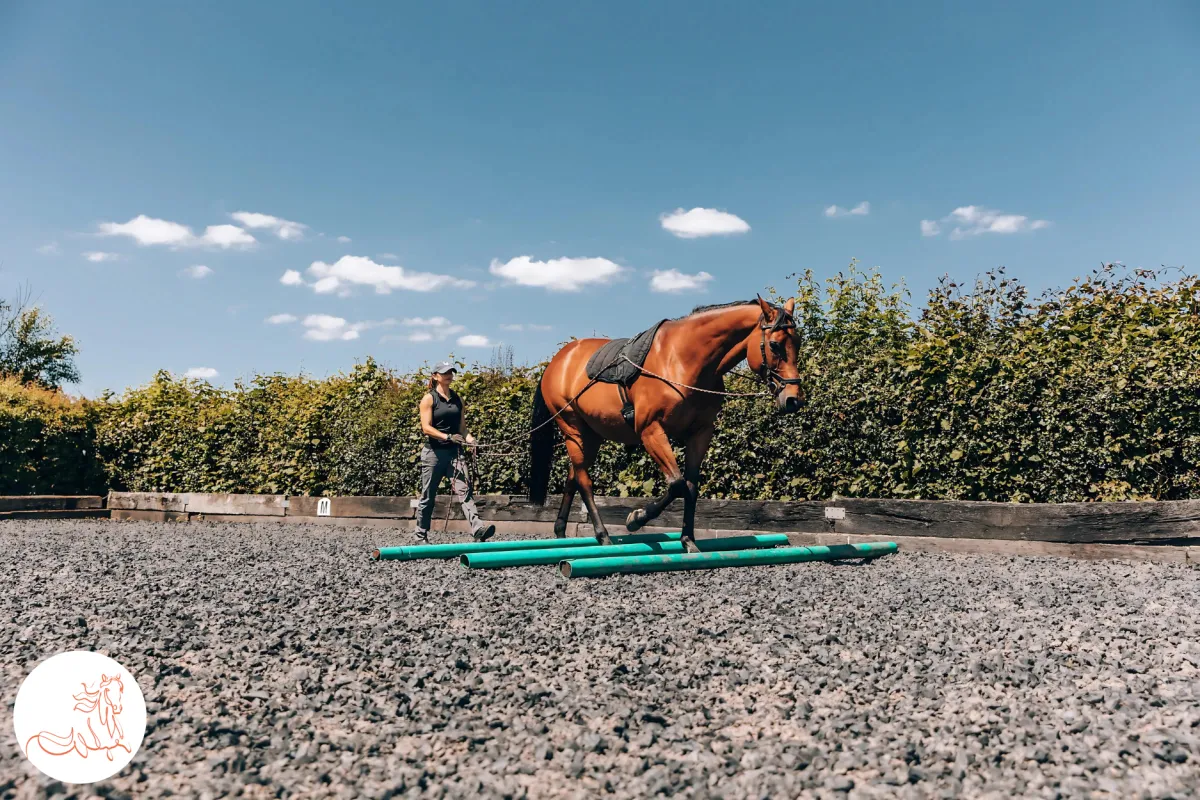
Why Your Horse Stays Hollow and What Actually Changes It
The biological reason core work fails, and the release that works instead.
The advice that keeps horses stiff
The most common advice for a hollow horse is to build his core through trot poles, driving him forward into the bridle to force engagement. Most riders follow it diligently, and the horse stays stiff.
There is a quiet guilt in this experience, knowing the horse is uncomfortable yet feeling stuck with advice that isn't resolving anything. The work gets done. The resistance remains. And the rider begins to wonder if the problem is something they are doing wrong.
It isn't a riding problem. It is a biology problem, and the standard approach is addressing the wrong thing entirely.
A hollow back is a biological brace
When a horse is in a state of sympathetic overload, in fight or flight, the spine hollows, the underneck braces and the jaw tightens simultaneously as one unified biological response. The body is preparing for escape. That is not a strength deficit. That is an alarm system switched on.
Strength cannot be built into a locked muscle. Drilling a tense horse compounds the tension rather than resolving it.
Riders are taught to address each symptom in isolation: topline work for the back, lateral flexions for the jaw, adjusted contact for the neck. The symptoms persist because the underlying cause is never touched. The nervous system remains in threat mode, and the horse continues to brace because that is exactly what the nervous system is designed to make him do.
The shift happens when the alarm is switched off rather than overpowered.
What this looks like in practice
Case Study
Sally brought me a 9-year-old mare who had been labelled resistant for three years, despite working through two trainers, a saddle fit consultation and a full course of bodywork.
When we looked at the footage together, the resistance had nothing to do with the mare's training history and everything to do with the nervous system of both horse and rider. Sally's own bracing pattern was sending a continuous threat signal, and the mare was responding exactly as biology required.
We identified the exact moment Sally's internal state triggered the lock, applied the release, and within three minutes of footage the mare's back had lifted.
This is the pattern that appears consistently across thousands of cases. The horse is not being difficult. The horse is responding to a signal, and once that signal is understood, it can be changed.
What about my horse specifically?
The most common question before working with someone new is whether this applies to their horse, whether the horse is too old, too young, a breed that has always been labelled stiff, or an OTTB with deep-rooted anxiety.
The biology does not change with breed, age or history. A horse in sympathetic overload hollows his spine and braces his underneck, and that is what the nervous system does every time the alarm is triggered. What changes is how quickly the pattern has become habitual and how clearly the lock can be identified at its source.
The frame-by-frame analysis exists precisely for this reason: to show exactly where the brace begins before it escalates, and the specific release that addresses it directly rather than managing the symptoms around it.
Live Event
The Hollow Horse Audit
I am opening my private archive of case studies to show exactly what this looks like in real time: real horses, real footage, analyzed frame by frame.
Date: Saturday 4th April 2026
Format: Live Zoom Seminar
Investment : £47
Recording Sent immediately after
The Release Guarantee
Come to the Live Audit, implement the 3-minute release, and if you do not feel a tangible softening in his back during your next ride, email me and I will refund your £47. I only want your investment if you get results.
