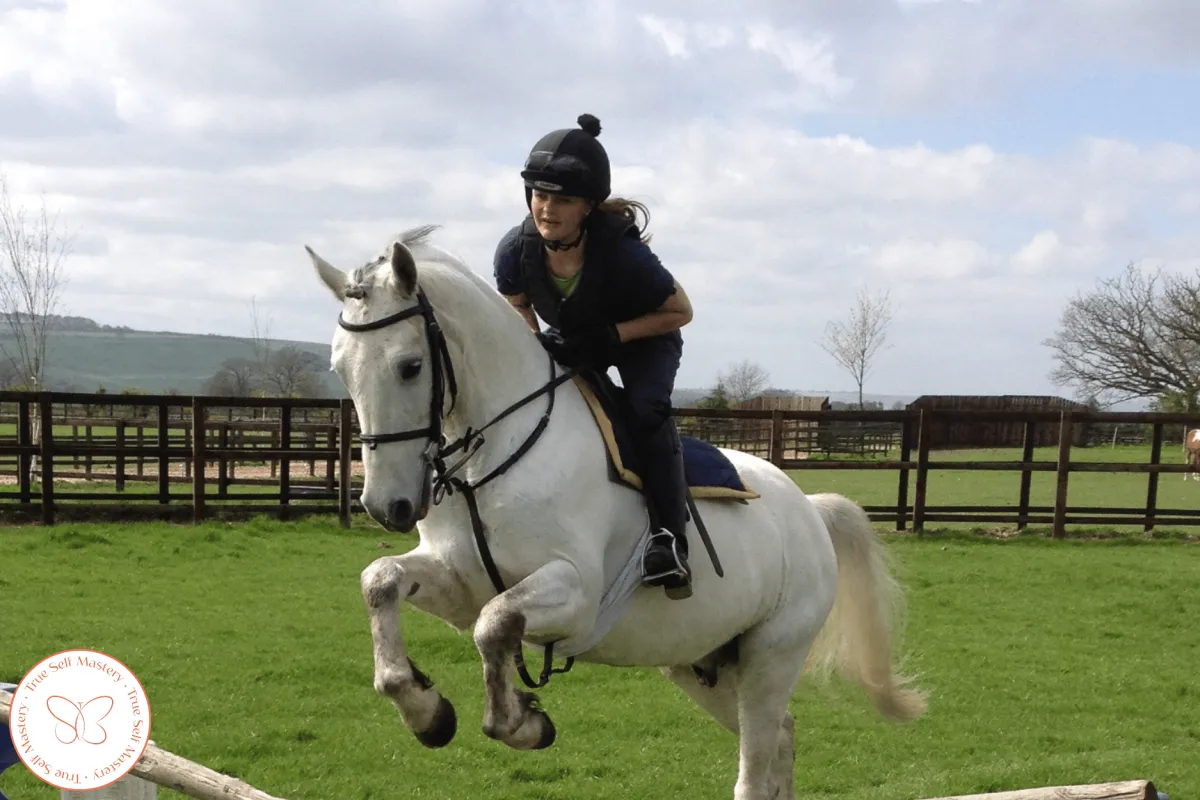
The Myth of "Not Letting the Horse Win"
I grew up with a saying that many riders still live by: “You can’t let the horse win.”
This perspective suggests that if you give a horse an inch, they’ll take a mile, and the moment you allow them to express an opinion, you’ve somehow lost the battle. It frames the entire relationship as a zero-sum game—a constant struggle for dominance where only one of you can be in control at any given time. However, I’ve come to believe the exact opposite is true.
Partnership vs. Compliance
When we refuse to let a horse "win," we are often simply refusing to let them speak. In almost any other area of life, if you try to share a thought or a boundary and someone immediately shuts you down, you don't feel like a partner; you feel like a tool being used for someone else's agenda.
Working with horses is a unique discipline because it relies entirely on a partnership between two different species. For that connection to be functional, there cannot be a winner and a loser. There is only the joining of two individuals coming together on equal terms, which must include the agency for the horse to say, "not today."
The "6th Gear" Feeling
I remember sitting on a Group 1 flat racing sprinter at Ripon Racecourse. He was an incredibly powerful, finely tuned athlete—the equestrian equivalent of an F1 car. When I shifted my hands just a centimeter to let him go for the final two furlongs, we transitioned from 3rd gear to 6th in a way that felt entirely effortless.
Because he loved his job, I could feel his joy and his competitive spirit radiating through the tack. That is what happens when a horse’s desires align with your own; the performance isn't something you force, it is something you allow.
The Cost of Ignoring the "No"
I’ve also sat on young fillies in racing where I could feel the struggle in every stride. They weren't being "difficult" or trying to "win" an argument; they were simply telling me they weren't ready and needed more time in a field to grow and mature.
The biggest fear many riders face is that if they actually give the horse a voice, the horse might say they don't want to do the job they were originally bought for. We often stick to the dominance model because it protects us from that realization, but ignoring the struggle doesn't make it go away—it just turns the relationship into a silent conflict.
A New Way Forward
We owe it to any horse we meet to give them the chance to show us what they actually want to do. When you stop viewing every interaction as a battle for control, you can finally start looking for the actual cause of the friction.
If you work a horse where they want to be, the resistance often disappears on its own. True partnership requires the courage to ask a question even when you might not like the answer, because a "no" that is heard is the only path toward a "yes" that is actually earned.
Are you ready to move past the power struggle and find that "6th gear" partnership?
