Session 3 of the Female Rider Code Series
I have spent years working with partnerships that were investing in exactly the right things and still not getting the results those investments should have produced.
The missing variable, in almost every case, was not more training or a better technique. It was a framework that had never asked whether this horse and this rider were structurally suited to the specific demands of the discipline they were training for.
When a partnership underperforms, the industry looks at the horse or the rider, and sometimes it finds something real in each, and either way the intervention goes into one athlete at a time, the physio works on the horse, the trainer works on the rider, each makes progress in their lane, and a season later the same ceiling is back, which we tend to read as the horse not being quite the right match for the level, or the rider not having put the right hours in, rather than as two systems that were never mapped against the thing that is actually asking the questions of them both.
What very few practitioners are trained to do is ask three questions simultaneously.
What does this discipline actually demand of both athletes?
What are they each capable of giving? And what is currently showing up in the arena?
Because if they did, they would find that most performance ceilings are not training problems. They are a predictable consequence of placing a specific horse functional type alongside a specific rider functional type inside a set of discipline demands that neither of their programmes was ever built to address.
That is the foundation of the framework I work from, and it is directly supported by the research behind discipline-specific, capacity-based assessment, which proposes not a universal ideal of movement that every partnership should aim for, but a system for understanding where the demand placed on two athletes exceeds the capacity they can actually give, and what to do about it without asking either of them to fight their own structure.
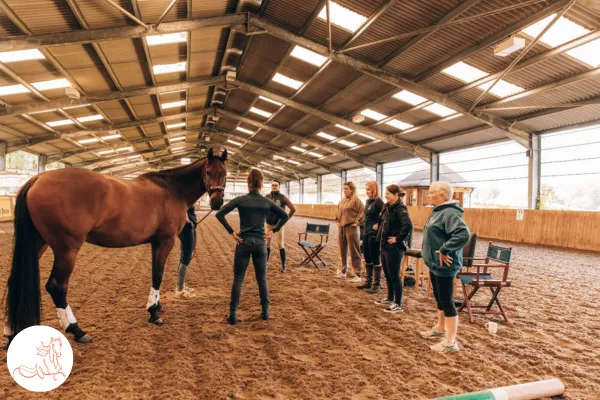
Session 3 of the Female Rider Code Series this Thursday covers exactly this: the five horse structural types, the four rider structural types, the suitability spectrum from High Suitability to danger Zone, and the four intervention strategies for working intelligently within the profile you have rather than the profile you wish you had.
The link for Part 3 registration:
