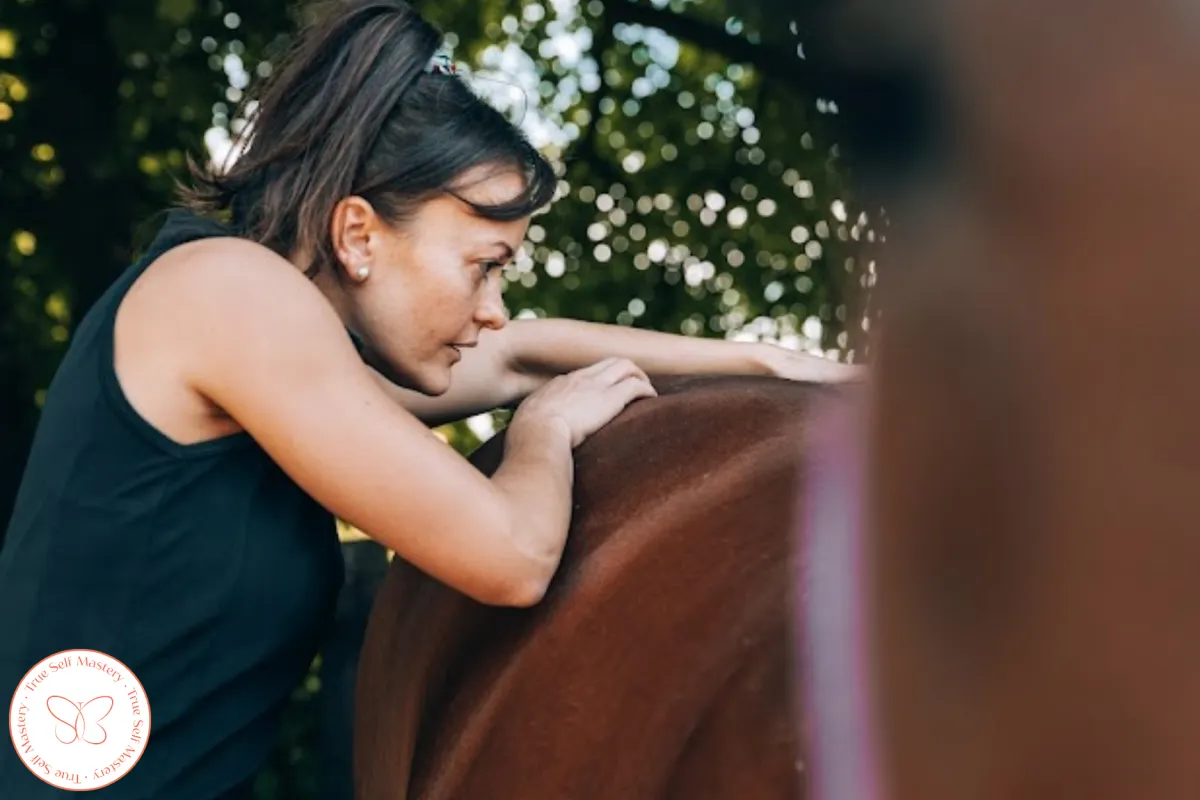
Most lameness in horses isn't the problem, it's the symptom
Most lameness in horses isn't the problem, it's the symptom
There's a pattern I've watched repeat in arenas, yards and clinics for years now, across riders, horses and disciplines that look nothing alike on the surface, and I think it's time to lay it out properly, because the cost of leaving it unnamed is being paid in horses, in careers, and in the slow erosion of trust between owners, riders, and the people they bring in to help them.
The pattern is this. A horse goes lame, the standard sequence of investigation runs its course, the leg gets treated, the horse rests, comes back into work, and three to six months later the same leg fails again, or its opposite does, and we tend to read that as bad luck rather than as the next round of a conversation we keep refusing to have.
What I have come to believe, after watching this play out in more partnerships than I can count, is that most lameness in horses is not actually the problem at all. It's the symptom of one. And until the industry as a whole starts treating it that way, we'll keep losing horses to a cycle nobody designed deliberately, and yet nobody seems to know how to step out of.
The standard sequence
When a horse goes lame the standard sequence runs the same way almost every time, and it's worth describing in full so we can see what it does and doesn't include.
Most professionals look at the leg first, which is the right thing to do, because acute structural issues need to be ruled out before anything else. Sometimes the investigation finds something concrete, in the soft tissue, the hock, the suspensory, the foot, and a treatment plan gets built around that finding. Sometimes the investigation finds nothing at all, and the horse is sent home with rest, with a note to bring her back in if it recurs, which it usually does, because almost nothing in the standard sequence is asking why the leg failed in the first place.
Either way the treatment goes into the leg. The horse rests. She gets scanned again at the four or six week mark. The scans look better, the lameness is gone or reduced, the horse comes back into work, and for a few weeks or a few months everything looks fine, until the same leg gives way again, or until the contralateral leg starts to show the same pattern, and we find ourselves standing in the same arena, holding the same rein, having the same conversation we had last spring.
The standard sequence is not wrong. It is doing exactly what it was designed to do, which is to identify and treat structural issues in the horse's leg. The problem is that the standard sequence was never designed to ask whether the leg is failing because something further upstream is asking it to compensate, week after week, year after year, for an asymmetry it didn't create.
What the standard sequence isn't trained to look at
What almost nobody in the standard sequence is trained, licensed or insured to do is ask the rider to dismount and walk in a straight line.
If they did, in many cases they would notice that her right hip drops every fourth step, or that her left shoulder rotates forward as she breathes out, or that she carries her weight through one sit bone consistently, even when she believes she is sitting evenly. None of these observations would feel dramatic in the moment. They would look subtle. They would look like the small variations in human movement that we all have, that we all live with, that we mostly never think about.
But the horse has been thinking about them. Or rather, the horse has been organising its body around them, every time the rider mounts, every step of every ride, for months or years. The horse compensates because it has no other option. It cannot tell the rider to fix her hip. It cannot refuse to load the leg that is being asked to carry the imbalance. It can only take what is given to it and absorb it through its own structure, which is what it does, until one day it can't.
That day, when the absorption finally fails and the leg gives way, is the day we book the vet.
The lameness in front of the vet that day is not a leg failing in isolation. It is the leg that finally ran out of compensation first. The pattern that produced it has been running for far longer than the lameness has been visible, and treating only the visible symptom guarantees that the same pattern will produce another lameness, in the same leg or in another, sometime in the next twelve months.
Why the system doesn't fix itself
If this analysis is broadly accurate, the obvious question is why the equine world keeps treating the parts instead of the system. There are three answers, and none of them are stupid.
The first is that the people in the standard sequence were trained that way, deliberately, by their professional bodies, and there is good reason for that training. An equine vet trains in equine medicine, which is a vast and demanding field, and is not licensed to assess human movement. A human sports physiotherapist trains in human bodies, and is not credentialed to palpate a horse's lumbar spine. A coach trains in technique and tactics, and is not asked, in any standard certification programme, to integrate human biomechanics with equine soundness data. Each profession is doing exactly what its scope of practice tells it to do, and asking any single one of them to step outside that scope is asking them to risk their license, their insurance, and the legal protection that comes with staying within their lane.
The second reason is that the rider doesn't always want it. It is emotionally easier to hear "your horse needs a chiropractor" than to hear "you need to look at how you carry your right hip and what it has been doing to your horse for the last two years." One of those sentences is a problem you can pay someone else to solve. The other is a problem you have to live in, every time you sit in the saddle, for as long as you choose to keep riding. Most of us, given the choice, will pay someone to fix the horse, and call it a day.
The third reason is that the horse cannot speak for itself. If a horse could turn around in the cross ties and say "I'm tracking up unevenly because she braces with her right knee every time we go to canter, and my left hind has been carrying for both of us for eighteen months," we would have solved this problem in the nineteenth century. The horse cannot do that. The horse can only show us, through movement, through tension, through behavioural shifts, through the slow accumulation of compensations that we mistake, more often than not, for personality.
So the system stays split. The cases keep recycling. The horses keep absorbing. And the credibility of the whole enterprise keeps quietly draining.
What changes when you start thinking as a system
The Equestrian Hybrid model is what I built to address this, and it is, at its core, very simple. It treats horse and rider as a single performance system rather than as two separate problems handed to two separate professionals who were never asked, or trained, or insured, to talk to each other.
When you start thinking this way, the questions you ask change. You stop asking only "what is wrong with this leg" and you start asking "what is this leg telling me about the system." You stop asking only "how do I improve this rider's position" and you start asking "what is the horse doing differently when this rider's position changes." You stop drilling the symptom in isolation and you start tracing it back upstream, to the place where the loop is being initiated, which is almost always somewhere in the shared movement of the partnership rather than in either body taken on its own.
You don't stop treating the leg. You treat the leg, of course, because it needs treating. But you also fix the upstream cause, because if you only treat the visible symptom, the loop is still running, and the next lameness is already on its way.
You don't stop coaching the rider's position. You coach it, because position matters. But you also watch what the horse does when the position shifts, because the rider's "improvement" only counts if the horse confirms it, and very often the horse will tell you that the rider has changed nothing, even when the rider's coach is convinced she has.
You don't stop being surprised when the same problem comes back. You stop being surprised in the first place, because you've already understood that treating half a system was always going to drag the other half back into the room within a few months.
What this means for your horse, this week
If you have a horse that has been through the lameness cycle more than once, and you suspect there is something systemic underneath it, here is one thing you can do this week, before booking anything else.
Pick a flat, even surface. Have someone film the horse from directly behind, walking in a straight line, on a long lead, for thirty seconds. Then mount up, walk the same line, same surface, same camera angle, for thirty seconds.
Compare the two clips. Watch the horse's hindquarters in both. If the way the horse moves changes meaningfully when you are sitting on her, that change is information. It is not a diagnosis. It is not a treatment plan. It is the beginning of a different conversation, one that asks what the horse is doing in response to you, and what you are doing in response to the horse, rather than treating either of you as a discrete problem.
That conversation is what the Equestrian Hybrid model is built around, and it is what we are getting into properly across four free live sessions this May, beginning with the session on the horse, which is exactly this question of what the horse is constantly telling us about the rider, and the signals we have been trained to read as "the leg" when they are in fact telling us about the system as a whole.
Where to go next
If this resonates, the four week live series is the place to take it further, and registration is open now.
Comment the word HORSE below.
One link, all four sessions, replays sent within twenty-four hours if you can't make it live. The first session is on the horse, and we'll be opening with this exact question of how to read what the horse is telling you about the system, rather than only what it is telling you about its leg.
I'd love to see you in the room.
Nika
