When is an asymmetrical pelvis
actually a problem?
A Systems Approach for Practitioners
A recorded webinar for equine practitioners on working out whether the pelvis
is the source, the compensator or the messenger,
and how to explain that to the owner and the vet.
We’ve all treated a pelvis that changed under our hands and was back in the same pattern a few weeks later, and it’s rarely because we treated it badly.
The pelvis is often where the problem shows up and not where it started,
so the real question isn’t whether we can treat it, it’s whether we should.
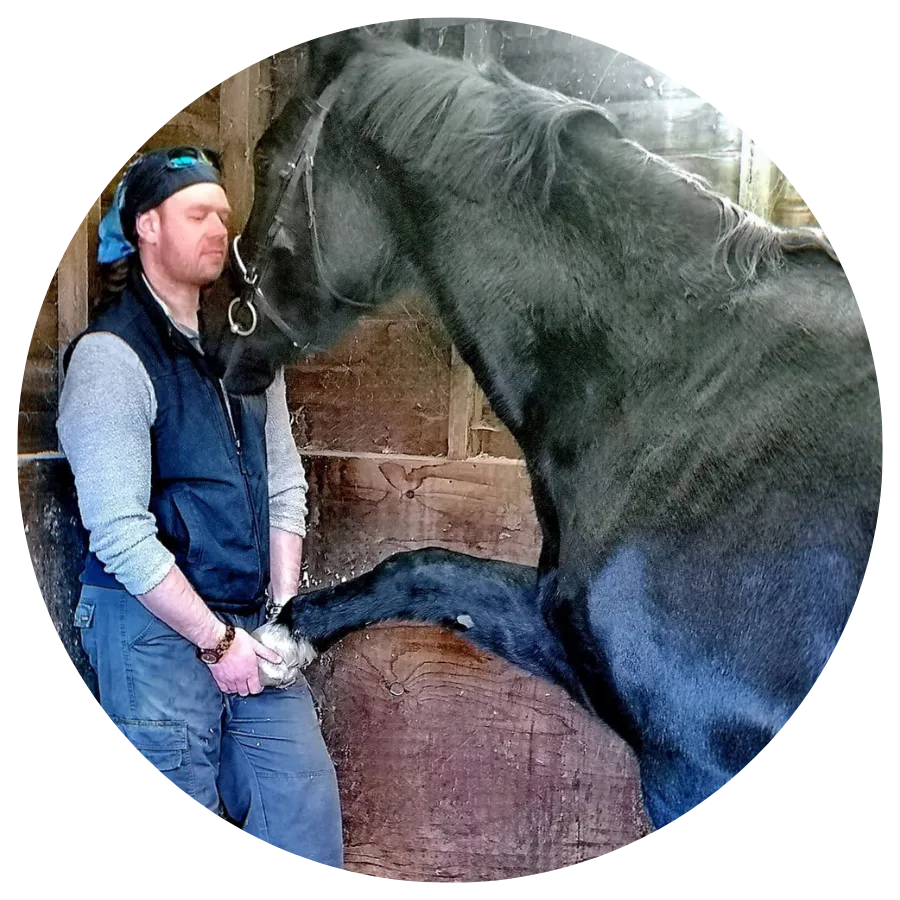
Recorded live on 16 October 2026 with Nika Vorster and Bradley Whale.
90 minutes, £29, with access to the full recording in our members area as soon as you’ve paid.
“The thoracic sling was brilliant.
This new way of assessing and measuring has transformed my treatments and client retention.”
Jane- Equine Physio
What's inside the recording
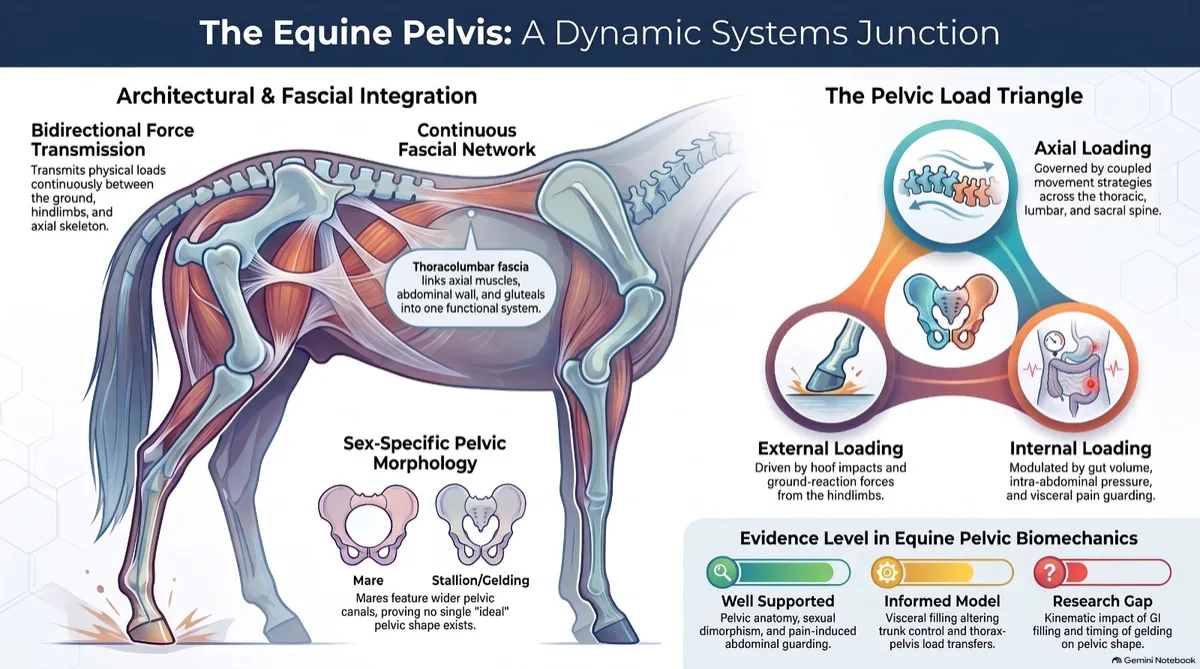
Mares, geldings and stallions.
How pelvic shape differs, why castration and development matter, and why one "ideal" pelvis doesn't fit every horse.
Source, compensator or messenger.
A practical framework for deciding whether the pelvis is actually the problem or simply reflecting something elsewhere.
Four findings we see every week.
Hunter's bump, high tuber sacrale, roached lumbar spine and the horse that stands wide behind.
Age, growth plates and development.
What dissections of the equine pelvis at different ages show us about when the pelvis fuses, why a young pelvis collapses inwards rather than springing outwards, and what that means for the horses we treat.
The lumbar spine and the bigger picture.
Why what we see behind may have started further forward, with a look at where fascia and the gut fit in.
Explaining it to the owner and the vet.
The words to stop using, the three sentences for the owner, and a four-line handover the vet can act on.
“I joined three webinars with Nika and Bradley, and honestly, as an equine practitioner with a pretty successful business, the information Nika and Bradley share is a game changer. I am now able to confidently speak to vets and other practitioners, things we are not taught whilst studying, and my business has doubled.”
Nikki- Equine Osteopath
Who it's for
Equine therapists, osteopaths, physiotherapists, chiropractors, veterinary professionals, rehabilitation practitioners, saddle fitters and trainers. No research background is needed.
Meet the Speakers
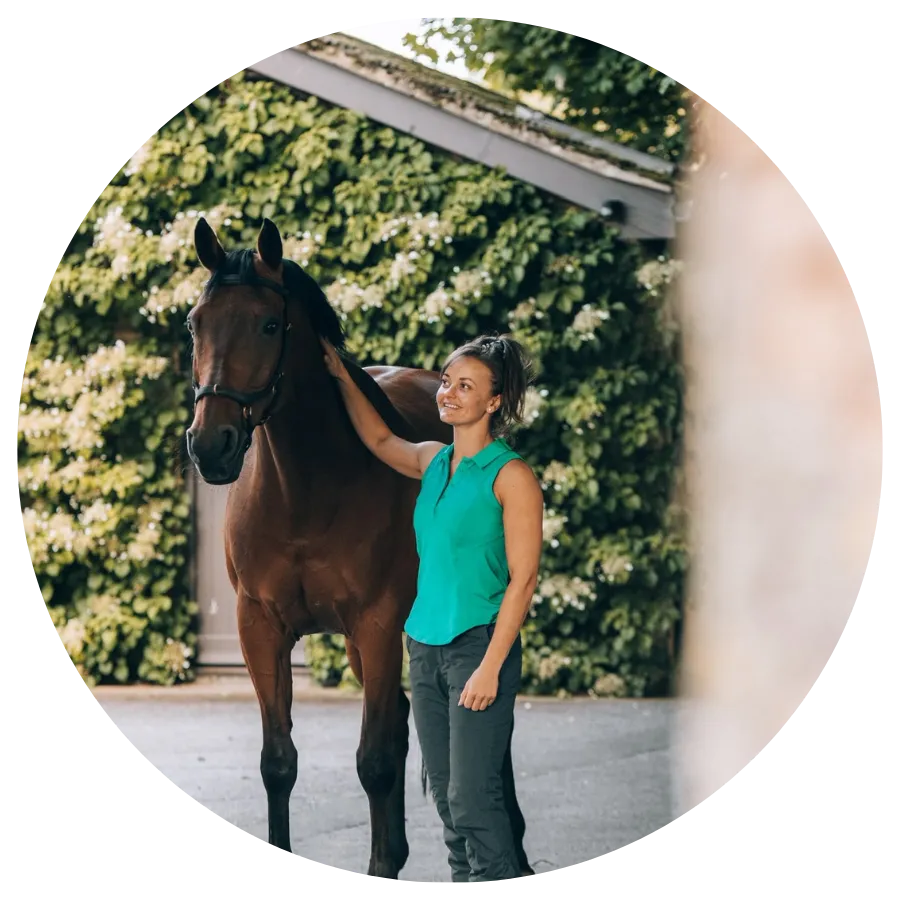
Nika Vorster, MSc
Nika Vorster is an internationally recognised equestrian performance specialist, NLP practitioner coach, and biomechanics expert with over thirty years of hands-on experience working with horses at the highest level.
A former flat jockey and GB MCI Dressage representative, Nika has competed, treated, and worked with horses and riders across Dubai, Asia, Australia, the United Kingdom, and Ireland, operating at Olympic level with high performing athletes. Her career spans every layer of the equestrian world, from grassroots horsemanship to elite international competition.
Combining three decades of practical expertise with advanced performance coaching and a Masters degree, Nika works with animal health practitioners and riders to sharpen clinical thinking, improve horse-rider performance outcomes, and develop practices that perform at the highest level.
Nika trained to Masters level at the McTimoney College in Oxfordshire, is registered with AHPR, and works alongside the vet, trainer and farrier as part of the horse’s whole team.