Frequently Asked Questions
Who can join True Self Mastery classes?
Our classes are open to all women who are interested in personal development and enhancing their well-being. No prior experience is necessary.
What types of classes do you offer?
We offer a variety of classes, including mindfulness meditation, yoga, self-care workshops, and empowerment seminars.
How do I sign up for a class?
You can sign up for classes through our website. Simply browse our class schedule, select the class you're interested in, and complete the registration process online.
How long are the classes?
Class lengths vary, but most sessions are between 60 to 90 minutes. Check the specific class details on our website for exact timings.
Can I attend a class online?
Yes, we offer both in-person and online classes to accommodate different preferences and schedules. Online class details and login information will be provided upon registration.
What is the cost of the classes?
Class fees vary depending on the type and duration of the class. Please visit our website for detailed pricing information.
Is there a membership option?
Yes, we offer membership packages that provide discounted rates on classes and workshops. Membership details and benefits are available on our website.
What if I need to cancel a class?
We understand that plans change. Please refer to our cancellation policy on the website for details on how to reschedule or cancel your class.
Is your horse's paddock ready for
what comes next?
Bare fields. Rock hard ground. No grass. Rising hay bills. Weeds taking over.
After weeks of hot, dry weather, most horse owners are standing at the gate asking the same question.
What do I do now?
And when the rain finally arrives, will your paddocks recover, or will today's drought problem simply become
this winter's mud problem?
Thursday 10 September 2026, 6pm UK. Live on Zoom.

WHAT YOU WILL WALK AWAY WITH
Three things you will leave with on the night.
1. How to read your own fields.
Whether your grass is dead or only dormant, why some areas failed first, and what the bare patches and the
weeds are telling you about the soil underneath them.
2. A plan for the next eight weeks.
What to do the week the rain arrives, when reseeding is worth the money and when it is money thrown away,
and whether that hard ground needs aerating or leaving well alone.
3. A way to stop this becoming winter mud.
Practical changes to gateways, troughs and high traffic areas, and how resting and rotating what you
already have can carry your horses through the wet with far less damage.
WHAT WE WILL COVER
* Dead or dormant, and how to tell the difference
* What to do in the first week after the rain returns
* Reseeding, aerating and soil testing, what is worth doing and what is not
* Why the weeds have taken over, and what that says about your soil
* Gateways, troughs and poached ground, before the wet sets in
* How better grazing management reduces what you have to buy in
* No complicated farming jargon. No need to become a soil expert.
* Practical information you can walk out and apply to your own fields.

YOUR FIELD IS ALREADY TELLING YOU WHAT IS WRONG
The drought has exposed the weak points.
Where did the grass disappear first?
Where have the horses destroyed the ground?
Where are the weeds appearing?
Where is the soil hardest?
And what will happen to those areas when weeks of rain arrive?
Learn how to read those signs and make practical decisions about what your land actually needs.
WHY THIS MATTERS FINANCIALLY
A field that does not recover this autumn costs you twice.
Once in bought forage through the winter,
and again in the poached ground, the mud, the lost grazing and the vet bills that follow it.
The decisions you make in the next few weeks will set what you spend between now and spring.
Meet the Speakers
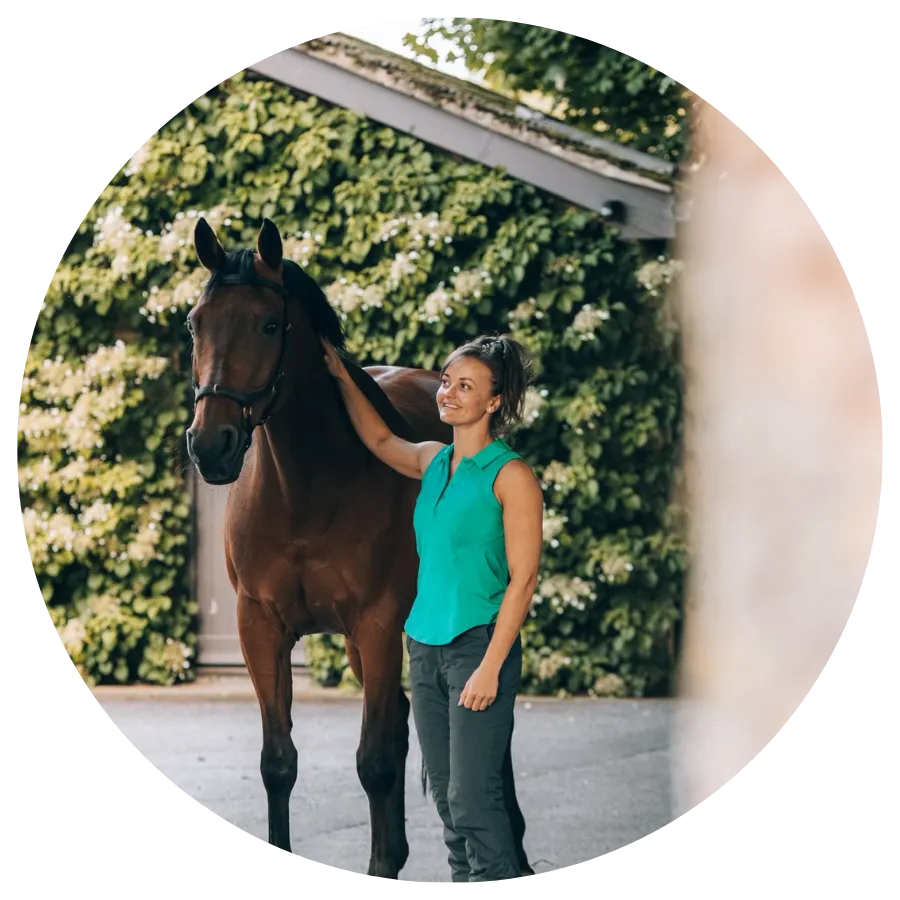
Nika Vorster, MSc
Nika Vorster is an internationally recognised equestrian performance specialist, NLP practitioner coach, and biomechanics expert with over thirty years of hands-on experience working with horses at the highest level.
A former flat jockey and GB MCI Dressage representative, Nika has competed, treated, and worked with horses and riders across Dubai, Asia, Australia, the United Kingdom, and Ireland, operating at Olympic level with high performing athletes. Her career spans every layer of the equestrian world, from grassroots horsemanship to elite international competition.
Combining three decades of practical expertise with advanced performance coaching and a Masters degree, Nika works with animal health practitioners and riders to sharpen clinical thinking, improve horse-rider performance outcomes, and develop practices that perform at the highest level.
Nika is the founder of The Rider Performance Code and the author of The Female Rider Code, due for publication in October 2026.